.jpg)




.jpg)







+%26+Tabitha+Simmons+(1765-1850)+Stone+at+Richmond+Cemetery,+KY.jpg)
+Edited.JPG)
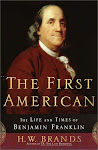




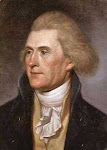

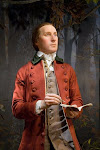
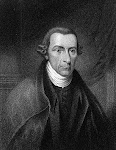
Have you ever wondered what happened to the 56 men who signed the Declaration of Independence?
British subjects at the time, they advocated the overthrow of the government for a free and independent America. It was, in fact, our first Civil War. These rebels signed the Declaration of Independence and pledged their lives, their fortunes, and their sacred honor to their new country.
Seventeen fought in the ensuing war. Thomas Nelson was a colonel in the Second Virginia Regiment and William Whipple served with the New Hampshire militia. Oliver Wolcott led the Connecticut regiments sent for the defense of New York and commanded a brigade of militia that took part in the defeat of General Burgoyne. Caesar Rodney was a Major General in the Delaware militia and John Hancock was the same in the Massachusetts militia.
Five of the signers were captured by the British during the war although only Richard Stockton of New Jersey is said to have been imprisoned solely for having signed the Declaration of Independence. He died after a year after he was released. Colonel George Walton was wounded and captured at the Battle of Savannah and was exchanged for a British naval captain. Captains Edward Rutledge, Thomas Heyward, and Arthur Middleton were all captured during the siege of Charleston in 1780 and exchanged a year later, too late to protect their property which had been looted as had the properties of Hall, Clymer, Walton, Hooper and Gwinnett. Gwinnett later died in a duel with a political rival in Georgia in 1777.
Thomas Lynch of South Carolina was arrested in 1780 and held on board a British prison ship for a year. During his imprisonment, his plantation was sacked and his slaves (more than 130) were taken and believed sold to sugar plantations in Jamaica. Twelve others had their homes ransacked and burned. Most of the homes that were destroyed were in the South at a time when the British had adopted a "scorched earth" policy against the colonies in an effort to gain the support of southern loyalists.
Carter Braxton of Virginia, a wealthy planter and trader, saw his ships swept from the seas by the British Navy and, after making several bad investments, was forced to sell his home and properties to pay his debts. Colonel Thomas McKean of Delaware was so hounded by the British that he was forced to move his family almost constantly. He served in the Congress without pay, and his family was kept in hiding.
Legend has it when Thomas Nelson Jr was told the British General Cornwallis had taken over his home for British headquarters, he replied, "Blow the damn thing down." Nelson's house is still standing at Yorktown and there are cannonballs embedded in its east wall.
Francis Lewis had his home and properties destroyed. His home on Long Island was destroyed by British calvary in the fall of 1776. Mrs. Lewis was captured by the British but was eventually released in exchange for a British officer's wife. Mrs. Lewis died two years after her release. Altoghether, eleven signers had their homes and property destroyed.
John Hart was driven from his wife's bedside as she was dying. Their 13 children fled for their lives. His fields and his gristmill were laid to waste. For more than a year he lived in forests and caves, returning home to find his wife dead and his children vanished. A few weeks later he died of exhaustion and a broken heart. Morris and Livingston suffered similar fates.
Abraham Clark of New Jersey had two of his sons captured by the British during the war. The son of John Witherspoon was killed at the Battle of Germantown.
What kind of men were these 56 rebels who signed the Declaration of Independence? Twenty-two were lawyers and nine were judges. Stephen Hopkins had been Governor of Rhode Island. Eighteen of the signers were merchants or businessmen, 14 were farmers, and four were doctors. Although two others had been clergy previously, John Witherspoon of New Jersey was the only active clergyman to attend. He wore his pontifical to the sessions.
These were men of means, interested in the well being of their fellow countrymen. 42 had served in their States legislature. They were well educated men. Seven had attended Harvard, four each at Yale and William & Mary, and three at Princeton. John Witherspoon was the president of Princeton and George Wythe was a professor at William & Mary.
Nine of the signers were immigrants, two were brothers, two were cousins, and one was an orphan. They were slave owners and duelists, men who were good in business and men who were not. In short, they were ordinary human beings, thrust into an extraordinary situation. They put their lives on the line to preserve the country they loved.
After the Revolution, 13 of the signers went on to become governors, and 18 served in their state legislatures. Sixteen became state and federal judges. Seven became members of the United States House of Representatives, and six became United States Senators. James Wilson and Samuel Chase became Justices of the United States Supreme Court.Thomas Jefferson, John Adams, and Elbridge Gerry each became Vice President, and John Adams and Thomas Jefferson became President. The sons of signers John Adams and Benjamin Harrison also became Presidents.
Oddly enough, two of the men who signed the Declaration of Independence died on July 4th! U.S. Presidents John Adams and Thomas Jefferson died 50 years after the signing, to the day. President James Monroe also died on the 4th, but in 1831. On July 4, 1872, President Calvin Coolidge was born. July 4th became a legal holiday until 1941.
Roger Sherman, Robert Morris, Benjamin Franklin, George Clymer, James Wilson, and George Reed later signed the United States Constitution. The Declaration of Independence, along with the Constitution and the Bill of Rights, is on public display at the Rotunda of the National Archives.
So, take a few minutes while enjoying your 4th of July Holiday and silently thank these patriots. It's not much to ask for the price they paid. Remember Freedom is never free!
Saturday, July 4, 2009

July 4th 1776!
July 4 1776 : U.S. declares independence
In Philadelphia, Pennsylvania, the Continental Congress adopts the Declaration of Independence, which proclaims the independence of the United States of America from Great Britain and its king. The declaration came 442 days after the first volleys of the American Revolution were fired at Lexington and Concord in Massachusetts and marked an ideological expansion of the conflict that would eventually encourage France's intervention on behalf of the Patriots.The first major American opposition to British policy came in 1765 after Parliament passed the Stamp Act, a taxation measure to raise revenues for a standing British army in America. Under the banner of "no taxation without representation," colonists convened the Stamp Act Congress in October 1765 to vocalize their opposition to the tax.
With its enactment in November, most colonists called for a boycott of British goods, and some organized attacks on the customhouses and homes of tax collectors. After months of protest in the colonies, Parliament voted to repeal the Stamp Act in March 1766.
Most colonists continued to quietly accept British rule until Parliament's enactment of the Tea Act in 1773, a bill designed to save the faltering East India Company by greatly lowering its tea tax and granting it a monopoly on the American tea trade. The low tax allowed the East India Company to undercut even tea smuggled into America by Dutch traders, and many colonists viewed the act as another example of taxation tyranny. In response, militant Patriots in Massachusetts organized the "Boston Tea Party," which saw British tea valued at some 18,000 pounds dumped into Boston Harbor.
Parliament, outraged by the Boston Tea Party and other blatant acts of destruction of British property, enacted the Coercive Acts, also known as the Intolerable Acts, in 1774. The Coercive Acts closed Boston to merchant shipping, established formal British military rule in Massachusetts, made British officials immune to criminal prosecution in America, and required colonists to quarter British troops. The colonists subsequently called the first Continental Congress to consider a united American resistance to the British.With the other colonies watching intently, Massachusetts led the resistance to the British, forming a shadow revolutionary government and establishing militias to resist the increasing British military presence across the colony.
In April 1775, Thomas Gage, the British governor of Massachusetts, ordered British troops to march to Concord, Massachusetts, where a Patriot arsenal was known to be located. On April 19, 1775, the British regulars encountered a group of American militiamen at Lexington, and the first shots of the American Revolution were fired.Initially, both the Americans and the British saw the conflict as a kind of civil war within the British Empire: To King George III it was a colonial rebellion, and to the Americans it was a struggle for their rights as British citizens.
However, Parliament remained unwilling to negotiate with the American rebels and instead purchased German mercenaries to help the British army crush the rebellion. In response to Britain's continued opposition to reform, the Continental Congress began to pass measures abolishing British authority in the colonies.In January 1776, Thomas Paine published Common Sense, an influential political pamphlet that convincingly argued for American independence and sold more than 500,000 copies in a few months. In the spring of 1776, support for independence swept the colonies, the Continental Congress called for states to form their own governments, and a five-man committee was assigned to draft a declaration.
The Declaration of Independence was largely the work of Virginian Thomas Jefferson. In justifying American independence, Jefferson drew generously from the political philosophy of John Locke, an advocate of natural rights, and from the work of other English theorists. The first section features the famous lines, "We hold these truths to be self-evident, that all men are created equal, that they are endowed by their Creator with certain unalienable Rights, that among these are Life, Liberty and the pursuit of Happiness." The second part presents a long list of grievances that provided the rationale for rebellion.
On July 2, 1776, the Continental Congress voted to approve a Virginia motion calling for separation from Britain. The dramatic words of this resolution were added to the closing of the Declaration of Independence.
Two days later, on July 4, the declaration was formally adopted by 12 colonies after minor revision. New York approved it on July 19.
On August 2, the declaration was signed.The American War for Independence would last for five more years. Yet to come were the Patriot triumphs at Saratoga, the bitter winter at Valley Forge, the intervention of the French, and the final victory at Yorktown in 1781. In 1783, with the signing of the Treaty of Paris with Britain, the United States formally became a free and independent nation.
In Philadelphia, Pennsylvania, the Continental Congress adopts the Declaration of Independence, which proclaims the independence of the United States of America from Great Britain and its king. The declaration came 442 days after the first volleys of the American Revolution were fired at Lexington and Concord in Massachusetts and marked an ideological expansion of the conflict that would eventually encourage France's intervention on behalf of the Patriots.The first major American opposition to British policy came in 1765 after Parliament passed the Stamp Act, a taxation measure to raise revenues for a standing British army in America. Under the banner of "no taxation without representation," colonists convened the Stamp Act Congress in October 1765 to vocalize their opposition to the tax.
With its enactment in November, most colonists called for a boycott of British goods, and some organized attacks on the customhouses and homes of tax collectors. After months of protest in the colonies, Parliament voted to repeal the Stamp Act in March 1766.
Most colonists continued to quietly accept British rule until Parliament's enactment of the Tea Act in 1773, a bill designed to save the faltering East India Company by greatly lowering its tea tax and granting it a monopoly on the American tea trade. The low tax allowed the East India Company to undercut even tea smuggled into America by Dutch traders, and many colonists viewed the act as another example of taxation tyranny. In response, militant Patriots in Massachusetts organized the "Boston Tea Party," which saw British tea valued at some 18,000 pounds dumped into Boston Harbor.
Parliament, outraged by the Boston Tea Party and other blatant acts of destruction of British property, enacted the Coercive Acts, also known as the Intolerable Acts, in 1774. The Coercive Acts closed Boston to merchant shipping, established formal British military rule in Massachusetts, made British officials immune to criminal prosecution in America, and required colonists to quarter British troops. The colonists subsequently called the first Continental Congress to consider a united American resistance to the British.With the other colonies watching intently, Massachusetts led the resistance to the British, forming a shadow revolutionary government and establishing militias to resist the increasing British military presence across the colony.
In April 1775, Thomas Gage, the British governor of Massachusetts, ordered British troops to march to Concord, Massachusetts, where a Patriot arsenal was known to be located. On April 19, 1775, the British regulars encountered a group of American militiamen at Lexington, and the first shots of the American Revolution were fired.Initially, both the Americans and the British saw the conflict as a kind of civil war within the British Empire: To King George III it was a colonial rebellion, and to the Americans it was a struggle for their rights as British citizens.
However, Parliament remained unwilling to negotiate with the American rebels and instead purchased German mercenaries to help the British army crush the rebellion. In response to Britain's continued opposition to reform, the Continental Congress began to pass measures abolishing British authority in the colonies.In January 1776, Thomas Paine published Common Sense, an influential political pamphlet that convincingly argued for American independence and sold more than 500,000 copies in a few months. In the spring of 1776, support for independence swept the colonies, the Continental Congress called for states to form their own governments, and a five-man committee was assigned to draft a declaration.
The Declaration of Independence was largely the work of Virginian Thomas Jefferson. In justifying American independence, Jefferson drew generously from the political philosophy of John Locke, an advocate of natural rights, and from the work of other English theorists. The first section features the famous lines, "We hold these truths to be self-evident, that all men are created equal, that they are endowed by their Creator with certain unalienable Rights, that among these are Life, Liberty and the pursuit of Happiness." The second part presents a long list of grievances that provided the rationale for rebellion.
On July 2, 1776, the Continental Congress voted to approve a Virginia motion calling for separation from Britain. The dramatic words of this resolution were added to the closing of the Declaration of Independence.
Two days later, on July 4, the declaration was formally adopted by 12 colonies after minor revision. New York approved it on July 19.
On August 2, the declaration was signed.The American War for Independence would last for five more years. Yet to come were the Patriot triumphs at Saratoga, the bitter winter at Valley Forge, the intervention of the French, and the final victory at Yorktown in 1781. In 1783, with the signing of the Treaty of Paris with Britain, the United States formally became a free and independent nation.
Thursday, July 2, 2009
It is The Veteran
Remember the Veteran on July 4th.
America's Independence Day is only so because of the courageous few who stood up on behalf of an oppressed people in the name of Freedom and still do today.
Freedom is NOT, and NEVER has been, FREE!
It is the Veteran, not the preacher, who has given us freedom of religion.
It is the Veteran, not the reporter, who has given us freedom of the press.
It is the Veteran, not the poet, who has given us freedom of speech.
It is the Veteran, not the campus organizer, who has given us freedom to assemble.
It is the Veteran, not the lawyer, who has given us the right to a fair trial.
It is the Veteran, not the politician, who has given us the right to vote.
It is the Veteran, who salutes the Flag.
It is the Veteran, who serves under the Flag.
To be buried by the flag.
So the protester can burn the flag.
America's Independence Day is only so because of the courageous few who stood up on behalf of an oppressed people in the name of Freedom and still do today.
Freedom is NOT, and NEVER has been, FREE!
It is the Veteran, not the preacher, who has given us freedom of religion.
It is the Veteran, not the reporter, who has given us freedom of the press.
It is the Veteran, not the poet, who has given us freedom of speech.
It is the Veteran, not the campus organizer, who has given us freedom to assemble.
It is the Veteran, not the lawyer, who has given us the right to a fair trial.
It is the Veteran, not the politician, who has given us the right to vote.
It is the Veteran, who salutes the Flag.
It is the Veteran, who serves under the Flag.
To be buried by the flag.
So the protester can burn the flag.
The real meaning of July 4: Power belongs to the people
As an American by choice rather than birth, I must confess to my growing concern that the 1776 declaration may not mean what it once did to those keepers of the trust who inhabit government today. July 4 serves as a frank invitation to consider the conditions and ideas that launched the promise of America.
What was it that provoked an assortment of dissatisfied and rebellious colonists to organize such a nation?
For over two centuries their dream has served to define freedom for the rest of the world.
How can we recapture the purity of that vision today?
One of the most compelling motivations for revolution was the Founding Fathers' profound sense of disconnect from the halls of power. Whether it was taxation without representation or the tendency of colonial governors to act without regard to the lives of average people, the distance between them and their government became as wide and deep as the ocean separating Boston from London.
The architects of America well understood what a potent catalyst for revolt that sense of disconnect could be. Consequently, they established principles guaranteed to ensure government of the people, by the people, and for the people. Over time, clarification after clarification has extended this umbrella to include women, minorities, and the poor. This sense of inclusion, bolstered by the weight of informed participation, was - and is - critical.
The message is clear: "This is our government; this country belongs to all of us." Indeed, how can freedom crumble when both the idea of liberty and the responsibility for its stewardship reside in the people? How can such a dream be eroded when authority is vested not in a favored few but with the average Joe?
The extraordinary influence of American citizens is guaranteed in the very Constitution that breathed life into this nascent republic when it was struggling to find its feet. However, every time government acts to increase the distance between real power and the people our government is commissioned to serve, we move a little further away from the meaning of July 4.
That's why it concerned me so much last week when the Supreme Court aligned itself with government and corporate interests at the expense of the rights of individual property owners.
It is not the first such move however; I smell the makings of a trend. When the government makes arrests on the basis of secret evidence; when taxing agencies overreach boundaries and abuse their power; when evidence increasingly suggests that, while we trusted them, leaders knowingly deceived us; when members of Congress award themselves privileges and benefits not available to those they purportedly serve; when the lifestyles of our representatives in Washington more closely resemble those of rock stars or European royalty than public servants.
I am worried that my fellow citizens, will continue to lose interest in a process of government too often perceived as unrelated to their everyday lives.
People tend to withdraw when they feel powerless and "out of the loop;" people tend to stay away from the ballot box when they no longer feel any relationship to those who govern; people tend to live outside the political process when they stop believing it pertains to them.
Indeed, the cultivation of "them and us" in any form compromises the promise of freedom.
Americans have never minded hard-working or smart people getting ahead - more power to them.
What does upset many Americans, however, is the idea that political clout could be related to anything other than citizenship. After all, didn't Mr. Smith go to Washington to protect us from the kind of conditions that caused Mr. Jefferson and his friends to gather in Philadelphia in the first place? Don't get me wrong; I'm not worried that we're going to have another revolution in America. Instead, I'm worried that people aren't going to care any longer; I'm concerned that they won't believe any more.
To my mind, that would be far worse.
- Derek Maul
What was it that provoked an assortment of dissatisfied and rebellious colonists to organize such a nation?
For over two centuries their dream has served to define freedom for the rest of the world.
How can we recapture the purity of that vision today?
One of the most compelling motivations for revolution was the Founding Fathers' profound sense of disconnect from the halls of power. Whether it was taxation without representation or the tendency of colonial governors to act without regard to the lives of average people, the distance between them and their government became as wide and deep as the ocean separating Boston from London.
The architects of America well understood what a potent catalyst for revolt that sense of disconnect could be. Consequently, they established principles guaranteed to ensure government of the people, by the people, and for the people. Over time, clarification after clarification has extended this umbrella to include women, minorities, and the poor. This sense of inclusion, bolstered by the weight of informed participation, was - and is - critical.
The message is clear: "This is our government; this country belongs to all of us." Indeed, how can freedom crumble when both the idea of liberty and the responsibility for its stewardship reside in the people? How can such a dream be eroded when authority is vested not in a favored few but with the average Joe?
The extraordinary influence of American citizens is guaranteed in the very Constitution that breathed life into this nascent republic when it was struggling to find its feet. However, every time government acts to increase the distance between real power and the people our government is commissioned to serve, we move a little further away from the meaning of July 4.
That's why it concerned me so much last week when the Supreme Court aligned itself with government and corporate interests at the expense of the rights of individual property owners.
It is not the first such move however; I smell the makings of a trend. When the government makes arrests on the basis of secret evidence; when taxing agencies overreach boundaries and abuse their power; when evidence increasingly suggests that, while we trusted them, leaders knowingly deceived us; when members of Congress award themselves privileges and benefits not available to those they purportedly serve; when the lifestyles of our representatives in Washington more closely resemble those of rock stars or European royalty than public servants.
I am worried that my fellow citizens, will continue to lose interest in a process of government too often perceived as unrelated to their everyday lives.
People tend to withdraw when they feel powerless and "out of the loop;" people tend to stay away from the ballot box when they no longer feel any relationship to those who govern; people tend to live outside the political process when they stop believing it pertains to them.
Indeed, the cultivation of "them and us" in any form compromises the promise of freedom.
Americans have never minded hard-working or smart people getting ahead - more power to them.
What does upset many Americans, however, is the idea that political clout could be related to anything other than citizenship. After all, didn't Mr. Smith go to Washington to protect us from the kind of conditions that caused Mr. Jefferson and his friends to gather in Philadelphia in the first place? Don't get me wrong; I'm not worried that we're going to have another revolution in America. Instead, I'm worried that people aren't going to care any longer; I'm concerned that they won't believe any more.
To my mind, that would be far worse.
- Derek Maul
Monday, May 25, 2009
True meaning of Memorial Day
Memorial Day is fast approaching.
But there's a problem. Most people have come to look upon Memorial Day as a kickoff for summer, a time for picnics and barbecues. Memorial Day is much, much more than that.
We need to remember and we need to offer our respect for those who paid the price for our freedoms; we need to hold in sacred reverence the memory of those who died serving their country. We need to ensure that they are never forgotten.
Over the years, the original meaning and sprit of Memorial Day has faded from the public consciousness.
If it is considered a holiday, why? I consider it to be a national day of mourning. That is how we observe the day in our home. Because of what that day represents, the rest of the days of the year are our holidays.
Memorial Day is a day to stop and pay, with sincere conviction, our respects for those who died protecting and preserving the freedoms we enjoy, for they are owed more than we can ever repay.
On May 5, 1868, three years after the Civil War ended, the head of the Grand Army of the Republic, a fraternal organization of Union Army veterans, established Decoration Day as a time for the nation to decorate the graves of the war dead with flowers. Maj. Gen. John A. Logan declared that Decoration Day should be observed on May 30, a date believed to be chosen because flowers would be in bloom all over the country.
Unfortunately, when Congress made Memorial day part of a mandatory three-day weekend through the National Holiday act of 1971, it made it all that much easier for us to be distracted from the spirit and meaning of the day.
It wasn't until after World War I that the day was expanded to honor those who have died in all American wars. In 1971 Memorial Day was declared a national holiday by an act of Congress, though it is still often called Decoration Day. It was then that it was also assigned to the last Monday in May, similar to other federal holidays relocated to Mondays.
These veterans lived and died, but not in vain, for they paused with us on their way to immortality--and our world is a better place for their efforts.
Let us never forget the sacrifices of those men and women--Our Patriots--who have paid the ultimate price to defend their country's freedom.
May they rest in Peace.
The perpetual light shines upon them.
Richard Kendzierski is the chairman of the Bedford Joint Veterans Council. (Bedford Sun)
But there's a problem. Most people have come to look upon Memorial Day as a kickoff for summer, a time for picnics and barbecues. Memorial Day is much, much more than that.
We need to remember and we need to offer our respect for those who paid the price for our freedoms; we need to hold in sacred reverence the memory of those who died serving their country. We need to ensure that they are never forgotten.
Over the years, the original meaning and sprit of Memorial Day has faded from the public consciousness.
If it is considered a holiday, why? I consider it to be a national day of mourning. That is how we observe the day in our home. Because of what that day represents, the rest of the days of the year are our holidays.
Memorial Day is a day to stop and pay, with sincere conviction, our respects for those who died protecting and preserving the freedoms we enjoy, for they are owed more than we can ever repay.
On May 5, 1868, three years after the Civil War ended, the head of the Grand Army of the Republic, a fraternal organization of Union Army veterans, established Decoration Day as a time for the nation to decorate the graves of the war dead with flowers. Maj. Gen. John A. Logan declared that Decoration Day should be observed on May 30, a date believed to be chosen because flowers would be in bloom all over the country.
Unfortunately, when Congress made Memorial day part of a mandatory three-day weekend through the National Holiday act of 1971, it made it all that much easier for us to be distracted from the spirit and meaning of the day.
It wasn't until after World War I that the day was expanded to honor those who have died in all American wars. In 1971 Memorial Day was declared a national holiday by an act of Congress, though it is still often called Decoration Day. It was then that it was also assigned to the last Monday in May, similar to other federal holidays relocated to Mondays.
These veterans lived and died, but not in vain, for they paused with us on their way to immortality--and our world is a better place for their efforts.
Let us never forget the sacrifices of those men and women--Our Patriots--who have paid the ultimate price to defend their country's freedom.
May they rest in Peace.
The perpetual light shines upon them.
Richard Kendzierski is the chairman of the Bedford Joint Veterans Council. (Bedford Sun)
Saturday, May 23, 2009
Recapturing America's Glory!
"It is said that there has never been a Democracy in the history of the world that has flourished for more than three centuries. If America slides into mediocrity, it will not be attributed to a shortage of money or an economical recession; rather, it will be because of the ever-widening gap in two important values in our society--"God & Integrity".
With God comes much love and respect--two virtues that are fast disappearing on the American societal landscape of the current day. Former President Ronald Reagan once said "We are One Nation Under God. The day we fail to realize this, we will be a Nation Gone Under." Some in the radically liberal left of our government, in particular, are taking our Christian. democratic principles and rights away from us at an alarming rate and in the process, are robbing America of the very spirit that gave birth to our great nation and the reason for which we have been so bountifully blessed since our founding.
Americans who truly love, appreciate, and understand how difficult it has been to obtain our cherished freedoms are our Patriots. America's Patriots know the heavy cost of our freedoms and as such, realize how easily it would be to lose these freedoms if we are not careful, vigilant, or elect to follow a path off course from those morally true principles and values that have never failed to define us as a morally elite Democracy and leader of the Free World.
American Patriots everywhere must lead all of America in standing up in protest and reclamation of our religious freedoms before they are gone. Before America is gone--a mere 300-year blip and another failed Democracy in the world's historical chronicles.
Take a close look at what is truly important. Our history has been characterized by many hills and valleys. But we have always persevered and rose above it all, because when we have taken the time to look up, we see the face of God, and it was he, himself, who pulled us up out of those dark valleys, so we could be warmed by the sun of a new fervent day.
Never be ashamed of your Christian roots! Never doubt our nation as long as God watches over us and is an active part of our lives. Don't let the politicians, the greedy, the jealous, and those who hate what we stand for, to take our inherent rights away from us and ultimately our nation.
Open your eyes, America, before it is too late! Stand up against big, corrupt government; hold our leaders accountable to the people many of them have forgotten; elect patriots who value "character" over change; and never, ever, let anyone tell you to hide your Christian-selves.
It's quite proper to say "Merry Christmas","God Bless America", and "In God We Trust!"--and mean it!
Let the New Era of Freedom Ring!
And always, Love & Pray for Our Nation.
With God comes much love and respect--two virtues that are fast disappearing on the American societal landscape of the current day. Former President Ronald Reagan once said "We are One Nation Under God. The day we fail to realize this, we will be a Nation Gone Under." Some in the radically liberal left of our government, in particular, are taking our Christian. democratic principles and rights away from us at an alarming rate and in the process, are robbing America of the very spirit that gave birth to our great nation and the reason for which we have been so bountifully blessed since our founding.
Americans who truly love, appreciate, and understand how difficult it has been to obtain our cherished freedoms are our Patriots. America's Patriots know the heavy cost of our freedoms and as such, realize how easily it would be to lose these freedoms if we are not careful, vigilant, or elect to follow a path off course from those morally true principles and values that have never failed to define us as a morally elite Democracy and leader of the Free World.
American Patriots everywhere must lead all of America in standing up in protest and reclamation of our religious freedoms before they are gone. Before America is gone--a mere 300-year blip and another failed Democracy in the world's historical chronicles.
Take a close look at what is truly important. Our history has been characterized by many hills and valleys. But we have always persevered and rose above it all, because when we have taken the time to look up, we see the face of God, and it was he, himself, who pulled us up out of those dark valleys, so we could be warmed by the sun of a new fervent day.
Never be ashamed of your Christian roots! Never doubt our nation as long as God watches over us and is an active part of our lives. Don't let the politicians, the greedy, the jealous, and those who hate what we stand for, to take our inherent rights away from us and ultimately our nation.
Open your eyes, America, before it is too late! Stand up against big, corrupt government; hold our leaders accountable to the people many of them have forgotten; elect patriots who value "character" over change; and never, ever, let anyone tell you to hide your Christian-selves.
It's quite proper to say "Merry Christmas","God Bless America", and "In God We Trust!"--and mean it!
Let the New Era of Freedom Ring!
And always, Love & Pray for Our Nation.
Thursday, May 21, 2009
Patriotic Quotes of The Day
I like to see a man proud of the place in which he lives. I like to see a man live so that his place will be proud of him.
~Abraham Lincoln
America is a tune. It must be sung together.
~Gerald Stanley Lee, Crowds
We can't all be Washingtons, but we can all be patriots.
~Charles F. Browne
What is the essence of America? Finding and maintaining that perfect, delicate balance between freedom "to" and freedom "from."
~Marilyn vos Savant, in Parade
[P]atriotism... is not short, frenzied outbursts of emotion, but the tranquil and steady dedication of a lifetime.
~Adlai Stevenson
A man's country is not a certain area of land, of mountains, rivers, and woods, but it is a principle; and patriotism is loyalty to that principle.
~George William Curtis
When an American says that he loves his country, he means not only that he loves the New England hills, the prairies glistening in the sun, the wide and rising plains, the great mountains, and the sea. He means that he loves an inner air, an inner light in which freedom lives and in which a man can draw the breath of self-respect.
~Adlai Stevenson
Love your country. Your country is the land where your parents sleep, where is spoken that language in which the chosen of your heart, blushing, whispered the first word of love; it is the home that God has given you that by striving to perfect yourselves therein you may prepare to ascend to him.
~Giuseppe Mazzini
There are those, I know, who will say that the liberation of humanity, the freedom of man and mind, is nothing but a dream. They are right. It is the American dream.
~Archibald MacLeish
National honor is national property of the highest value.
~James Monroe, first inaugural address, 4 March 1817
How often we fail to realize our good fortune in living in a country where happiness is more than a lack of tragedy.
~Paul Sweeney
May the sun in his course visit no land more free, more happy, more lovely, than this our own country!
~Daniel Webster
This nation will remain the land of the free only so long as it is the home of the brave.
~Elmer Davis
The stern hand of fate has scourged us to an elevation where we can see the great everlasting things that matter for a nation; the great peaks of honour we had forgotten - duty and patriotism, clad in glittering white; the great pinnacle of sacrifice pointing like a rugged finger to heaven.
~David Lloyd George
Yet America is a poem in our eyes; its ample geography dazzles the imagination, and it will not wait long for metres.
~Ralph Waldo Emerson, "The Poet," Essays, Second Series, 1844
If our country is worth dying for in time of war let us resolve that it is truly worth living for in time of peace.
~Hamilton Fish
And I'm proud to be an American,where at least I know I'm free. And I won't forget the men who died,who gave that right to me.
~Lee Greenwood
The cement of this union is the heart-blood of every American.
~Thomas Jefferson
America is much more than a geographical fact. It is a political and moral fact - the first community in which men set out in principle to institutionalize freedom, responsible government, and human equality.
~Adlai Stevenson
From every mountain sideLet Freedom ring.
~Samuel F. Smith, "America
"Ours is the only country deliberately founded on a good idea.
~John Gunther
America is a passionate idea or it is nothing. America is a human brotherhood or it is chaos. ~Max Lerner, Actions and Passions, 1949
Then join hand in hand, brave Americans all! By uniting we stand, by dividing we fall.
~John Dickinson
The skies of happiness shine upon these United States of America.
~Mirakel Reves
If you are ashamed to stand by your colors, you had better seek another flag.
~Author Unknown
Where liberty dwells, there is my country.
~Benjamin Franklin
Liberty and Union, now and forever, one and inseparable!
~Daniel Webster
If you take advantage of everything America has to offer, there’s nothing you can’t accomplish. ~Geraldine Ferraro
Oh, it's home again and home again, America for me!I want a ship that's westward bound to plough the rolling seaTo the blessed land of Room Enough beyond the ocean bars,Where the air is full of sunlight and the flag is full of stars.
~Henry Van Dyke
Sometimes people call me an idealist. Well, that is the way I know I am an American. America is the only idealistic nation in the world.
~Woodrow Wilson
This, then, is the state of the union: free and restless, growing and full of hope. So it was in the beginning. So it shall always be, while God is willing, and we are strong enough to keep the faith. ~Lyndon B. Johnson
We sleep peacefully at night, cradled by the big strong hands of America.
~Val Saintsbury
America is another name for opportunity. Our whole history appears like a last effort of divine providence on behalf of the human race.
~Ralph Waldo Emerson
I love my freedom. I love my America.
~Jessi Lane Adams
This country will not be a good place for any of us to live in unless we make it a good place for all of us to live in.
~Theodore Roosevelt
Of all the supervised conditions for life offered man, those under USA's constitution have proved the best. Wherefore, be sure when you start modifying, corrupting or abrogating it.
~Martin H. Fischer
He loves his country best who strives to make it best.
~Robert G. Ingersoll
It is the love of country that has lighted and that keeps glowing the holy fire of patriotism.
~J. Horace McFarland"
Our country, right or wrong." When right to be kept right; when wrong to be put right.
~Carl Schurz
Off with your hat, as the flag goes by! And let the heart have its say; you're man enough for a tear in your eye that you will not wipe away.
~Henry Cuyler Bunner
It is the flag just as much of the man who was naturalized yesterday as of the men whose people have been here many generations.
~Henry Cabot Lodge
The winds that blow through the wide sky in these mounts, the winds that sweep from Canada to Mexico, from the Pacific to the Atlantic - have always blown on free men.
~Franklin D. Roosevelt
Some Americans need hyphens in their names, because only part of them has come over; but when the whole man has come over, heart and thought and all, the hyphen drops of its own weight out of his name.
~Woodrow Wilson
Star-spangled happiness and banner waves of pride.
~Cherishe Archer
My God! How little do my countrymen know what precious blessings they are in possession of, and which no other people on earth enjoy!
~Thomas Jefferson
America, for me, has been the pursuit and catching of happiness.
~Aurora Raigne
I wish that every human life might be pure transparent freedom.
~Simone de Beauvoir
There is nothing wrong with America that cannot be cured by what is right with America. ~William J. Clinton
My favorite thing about the United States? Lots of Americans, one America.
~Val Saintsbury
Our country is not the only thing to which we owe our allegiance. It is also owed to justice and to humanity. Patriotism consists not in waving the flag, but in striving that our country shall be righteous as well as strong.
~James Bryce
Our great modern Republic. May those who seek the blessings of its institutions and the protection of its flag remember the obligations they impose.
~Ulysses S. Grant
For what avail the plough or sail, or land or life, if freedom fail?
~Ralph Waldo Emerson
Those who won our independence believed liberty to be the secret of happiness and courage to be the secret of liberty.
~Louis D. Brandeis
Men love their country, not because it is great, but because it is their own.
~Seneca
Territory is but the body of a nation. The people who inhabit its hills and valleys are its soul, its spirit, its life.
~James Garfield
Ev'ry heart beats true'neath the Red, White and Blue,
~George M. Cohan
We need a type of patriotism that recognizes the virtues of those who are opposed to us..... The old "manifest destiny" idea ought to be modified so that each nation has the manifest destiny to do the best it can - and that without cant, without the assumption of self-righteousness and with a desire to learn to the uttermost from other nations.
~Francis John McConnell
I believe in America because we have great dreams - and because we have the opportunity to make those dreams come true.
~Wendell L. Wilkie
To me, being an American means feeling safe.
~Currielene Armstrong
We on this continent should never forget that men first crossed the Atlantic not to find soil for their ploughs but to secure liberty for their souls.
~Robert J. McCracken
It is sweet to serve one's country by deeds, and it is not absurd to serve her by words. ~Sallust
We need an America with the wisdom of experience. But we must not let America grow old in spirit.
~Hubert H. Humphrey
May I never wake up from the American dream.
~Carrie Latet
A real patriot is the fellow who gets a parking ticket and rejoices that the system works.
~Bill Vaughan
I think there is one higher office than president and I would call that patriot.
~Gary Hart
My patriotic heart beats red, white, and blue.
~Author Unknown
Each man must for himself alone decide what is right and what is wrong, which course is patriotic and which isn't. You cannot shirk this and be a man. To decide against your conviction is to be an unqualified and excusable traitor, both to yourself and to your country, let men label you as they may.
~Mark Twain
All we have of freedom, all we use or know - This our fathers bought for us long and long ago.
~Rudyard Kipling, The Old Issue, 1899
What we need are critical lovers of America - patriots who express their faith in their country by working to improve it.
~Hubert H. Humphrey
You cannot spill a drop of American blood without spilling the blood of the whole world.... We are not a nation, so much as a world.
~Herman Melville
Our hearts where they rocked our cradle, Our love where we spent our toil,And our faith, and our hope, and our honor,We pledge to our native soil. God gave all men all earth to love, But since our hearts are small,Ordained for each one spot should prove Beloved over all.
~Rudyard Kipling
He is a poor patriot whose patriotism does not enable him to understand how all men everywhere feel about their altars and their hearthstones, their flag and their fatherland. ~Harry Emerson Fosdick
We have enjoyed so much freedom for so long that we are perhaps in danger of forgetting how much blood it cost to establish the Bill of Rights.
~Felix Frankfurter
Patriotism is easy to understand in America - it means looking out for yourself by looking out for your country. ~Calvin Coolidge
We dare not forget that we are the heirs of that first revolution.
~John F. Kennedy
The American Revolution was a beginning, not a consummation.
~Woodrow Wilson
Intellectually I know that America is no better than any other country; emotionally I know she is better than every other country.
~Sinclair Lewis
~Abraham Lincoln
America is a tune. It must be sung together.
~Gerald Stanley Lee, Crowds
We can't all be Washingtons, but we can all be patriots.
~Charles F. Browne
What is the essence of America? Finding and maintaining that perfect, delicate balance between freedom "to" and freedom "from."
~Marilyn vos Savant, in Parade
[P]atriotism... is not short, frenzied outbursts of emotion, but the tranquil and steady dedication of a lifetime.
~Adlai Stevenson
A man's country is not a certain area of land, of mountains, rivers, and woods, but it is a principle; and patriotism is loyalty to that principle.
~George William Curtis
When an American says that he loves his country, he means not only that he loves the New England hills, the prairies glistening in the sun, the wide and rising plains, the great mountains, and the sea. He means that he loves an inner air, an inner light in which freedom lives and in which a man can draw the breath of self-respect.
~Adlai Stevenson
Love your country. Your country is the land where your parents sleep, where is spoken that language in which the chosen of your heart, blushing, whispered the first word of love; it is the home that God has given you that by striving to perfect yourselves therein you may prepare to ascend to him.
~Giuseppe Mazzini
There are those, I know, who will say that the liberation of humanity, the freedom of man and mind, is nothing but a dream. They are right. It is the American dream.
~Archibald MacLeish
National honor is national property of the highest value.
~James Monroe, first inaugural address, 4 March 1817
How often we fail to realize our good fortune in living in a country where happiness is more than a lack of tragedy.
~Paul Sweeney
May the sun in his course visit no land more free, more happy, more lovely, than this our own country!
~Daniel Webster
This nation will remain the land of the free only so long as it is the home of the brave.
~Elmer Davis
The stern hand of fate has scourged us to an elevation where we can see the great everlasting things that matter for a nation; the great peaks of honour we had forgotten - duty and patriotism, clad in glittering white; the great pinnacle of sacrifice pointing like a rugged finger to heaven.
~David Lloyd George
Yet America is a poem in our eyes; its ample geography dazzles the imagination, and it will not wait long for metres.
~Ralph Waldo Emerson, "The Poet," Essays, Second Series, 1844
If our country is worth dying for in time of war let us resolve that it is truly worth living for in time of peace.
~Hamilton Fish
And I'm proud to be an American,where at least I know I'm free. And I won't forget the men who died,who gave that right to me.
~Lee Greenwood
The cement of this union is the heart-blood of every American.
~Thomas Jefferson
America is much more than a geographical fact. It is a political and moral fact - the first community in which men set out in principle to institutionalize freedom, responsible government, and human equality.
~Adlai Stevenson
From every mountain sideLet Freedom ring.
~Samuel F. Smith, "America
"Ours is the only country deliberately founded on a good idea.
~John Gunther
America is a passionate idea or it is nothing. America is a human brotherhood or it is chaos. ~Max Lerner, Actions and Passions, 1949
Then join hand in hand, brave Americans all! By uniting we stand, by dividing we fall.
~John Dickinson
The skies of happiness shine upon these United States of America.
~Mirakel Reves
If you are ashamed to stand by your colors, you had better seek another flag.
~Author Unknown
Where liberty dwells, there is my country.
~Benjamin Franklin
Liberty and Union, now and forever, one and inseparable!
~Daniel Webster
If you take advantage of everything America has to offer, there’s nothing you can’t accomplish. ~Geraldine Ferraro
Oh, it's home again and home again, America for me!I want a ship that's westward bound to plough the rolling seaTo the blessed land of Room Enough beyond the ocean bars,Where the air is full of sunlight and the flag is full of stars.
~Henry Van Dyke
Sometimes people call me an idealist. Well, that is the way I know I am an American. America is the only idealistic nation in the world.
~Woodrow Wilson
This, then, is the state of the union: free and restless, growing and full of hope. So it was in the beginning. So it shall always be, while God is willing, and we are strong enough to keep the faith. ~Lyndon B. Johnson
We sleep peacefully at night, cradled by the big strong hands of America.
~Val Saintsbury
America is another name for opportunity. Our whole history appears like a last effort of divine providence on behalf of the human race.
~Ralph Waldo Emerson
I love my freedom. I love my America.
~Jessi Lane Adams
This country will not be a good place for any of us to live in unless we make it a good place for all of us to live in.
~Theodore Roosevelt
Of all the supervised conditions for life offered man, those under USA's constitution have proved the best. Wherefore, be sure when you start modifying, corrupting or abrogating it.
~Martin H. Fischer
He loves his country best who strives to make it best.
~Robert G. Ingersoll
It is the love of country that has lighted and that keeps glowing the holy fire of patriotism.
~J. Horace McFarland"
Our country, right or wrong." When right to be kept right; when wrong to be put right.
~Carl Schurz
Off with your hat, as the flag goes by! And let the heart have its say; you're man enough for a tear in your eye that you will not wipe away.
~Henry Cuyler Bunner
It is the flag just as much of the man who was naturalized yesterday as of the men whose people have been here many generations.
~Henry Cabot Lodge
The winds that blow through the wide sky in these mounts, the winds that sweep from Canada to Mexico, from the Pacific to the Atlantic - have always blown on free men.
~Franklin D. Roosevelt
Some Americans need hyphens in their names, because only part of them has come over; but when the whole man has come over, heart and thought and all, the hyphen drops of its own weight out of his name.
~Woodrow Wilson
Star-spangled happiness and banner waves of pride.
~Cherishe Archer
My God! How little do my countrymen know what precious blessings they are in possession of, and which no other people on earth enjoy!
~Thomas Jefferson
America, for me, has been the pursuit and catching of happiness.
~Aurora Raigne
I wish that every human life might be pure transparent freedom.
~Simone de Beauvoir
There is nothing wrong with America that cannot be cured by what is right with America. ~William J. Clinton
My favorite thing about the United States? Lots of Americans, one America.
~Val Saintsbury
Our country is not the only thing to which we owe our allegiance. It is also owed to justice and to humanity. Patriotism consists not in waving the flag, but in striving that our country shall be righteous as well as strong.
~James Bryce
Our great modern Republic. May those who seek the blessings of its institutions and the protection of its flag remember the obligations they impose.
~Ulysses S. Grant
For what avail the plough or sail, or land or life, if freedom fail?
~Ralph Waldo Emerson
Those who won our independence believed liberty to be the secret of happiness and courage to be the secret of liberty.
~Louis D. Brandeis
Men love their country, not because it is great, but because it is their own.
~Seneca
Territory is but the body of a nation. The people who inhabit its hills and valleys are its soul, its spirit, its life.
~James Garfield
Ev'ry heart beats true'neath the Red, White and Blue,
~George M. Cohan
We need a type of patriotism that recognizes the virtues of those who are opposed to us..... The old "manifest destiny" idea ought to be modified so that each nation has the manifest destiny to do the best it can - and that without cant, without the assumption of self-righteousness and with a desire to learn to the uttermost from other nations.
~Francis John McConnell
I believe in America because we have great dreams - and because we have the opportunity to make those dreams come true.
~Wendell L. Wilkie
To me, being an American means feeling safe.
~Currielene Armstrong
We on this continent should never forget that men first crossed the Atlantic not to find soil for their ploughs but to secure liberty for their souls.
~Robert J. McCracken
It is sweet to serve one's country by deeds, and it is not absurd to serve her by words. ~Sallust
We need an America with the wisdom of experience. But we must not let America grow old in spirit.
~Hubert H. Humphrey
May I never wake up from the American dream.
~Carrie Latet
A real patriot is the fellow who gets a parking ticket and rejoices that the system works.
~Bill Vaughan
I think there is one higher office than president and I would call that patriot.
~Gary Hart
My patriotic heart beats red, white, and blue.
~Author Unknown
Each man must for himself alone decide what is right and what is wrong, which course is patriotic and which isn't. You cannot shirk this and be a man. To decide against your conviction is to be an unqualified and excusable traitor, both to yourself and to your country, let men label you as they may.
~Mark Twain
All we have of freedom, all we use or know - This our fathers bought for us long and long ago.
~Rudyard Kipling, The Old Issue, 1899
What we need are critical lovers of America - patriots who express their faith in their country by working to improve it.
~Hubert H. Humphrey
You cannot spill a drop of American blood without spilling the blood of the whole world.... We are not a nation, so much as a world.
~Herman Melville
Our hearts where they rocked our cradle, Our love where we spent our toil,And our faith, and our hope, and our honor,We pledge to our native soil. God gave all men all earth to love, But since our hearts are small,Ordained for each one spot should prove Beloved over all.
~Rudyard Kipling
He is a poor patriot whose patriotism does not enable him to understand how all men everywhere feel about their altars and their hearthstones, their flag and their fatherland. ~Harry Emerson Fosdick
We have enjoyed so much freedom for so long that we are perhaps in danger of forgetting how much blood it cost to establish the Bill of Rights.
~Felix Frankfurter
Patriotism is easy to understand in America - it means looking out for yourself by looking out for your country. ~Calvin Coolidge
We dare not forget that we are the heirs of that first revolution.
~John F. Kennedy
The American Revolution was a beginning, not a consummation.
~Woodrow Wilson
Intellectually I know that America is no better than any other country; emotionally I know she is better than every other country.
~Sinclair Lewis
Subscribe to:
Posts (Atom)